
Selvol PVOH 205 adalah resin polivinil alkohol terhidrolisis sebagian dengan viskositas rendah. Dalam kimia industri, memilih jenis resin yang tepat—bukan hanya kategori polimer umum—sangat penting untuk stabilitas formulasi, efisiensi proses, dan kinerja adhesi akhir.
1. Spesifikasi Teknis & Karakteristik Utama
Selvol PVOH 205 dicirikan oleh struktur molekulnya yang seimbang dan sifat fisik spesifiknya:
| Parameter Kunci | Spesifikasi | Dampak Teknis |
| Derajat Hidrolisis | 87,0–89,0 mol% (~88 mol% nominal) | Menyisakan gugus asetat pada rantai utama polimer, meningkatkan aktivitas permukaan, fleksibilitas, dan kompatibilitas dengan substrat hidrofobik. |
| Viskositas (Larutan Air 4% @ 20°C) | 5,2–6,2 cP | Kisaran berat molekul rendah memastikan beban reologi rendah, kemampuan pemompaan tinggi, dan pelarutan cepat bahkan pada konsentrasi padatan yang lebih tinggi. |
| Kisaran pH Kerja | 4,5–6,5 | Menghasilkan larutan berair yang jernih dan stabil dalam kondisi formulasi standar. |
| Varian Produk | Butiran Standar & Bubuk Halus | Bentuk bubuk halus memungkinkan pencampuran kering yang mudah dalam formulasi semen dan gipsum. |
| Kepatuhan Regulasi | Mematuhi peraturan kontak makanan FDA dan BfR. | Cocok untuk aplikasi kontak tidak langsung dengan makanan, termasuk perekat kertas/kemasan. |
Keunggulan Formulasi Utama Dibandingkan dengan Grade yang Terhidrolisis Sepenuhnya
Dibandingkan dengan jenis PVOH yang terhidrolisis sepenuhnya (seperti PVA 098-03), Selvol PVOH 205 menawarkan manfaat pemrosesan dan kinerja yang penting:
Aktivitas Permukaan & Emulsifikasi yang Lebih Tinggi: Gugus asetil residual memberikan sifat amfifilik, menjadikannya koloid pelindung dan pengemulsi yang sangat baik.
Fleksibilitas Film yang Unggul: Membentuk film kering yang lebih lembut, tidak rapuh, dengan elongasi lebih tinggi dan retak akibat tegangan lebih rendah dibandingkan dengan film kaku yang terhidrolisis sepenuhnya.
Daya Rekat Substrat yang Ditingkatkan: Menunjukkan daya rekat dan adhesi yang kuat pada substrat non-polar, sintetis, atau selulosa.
Suhu Pelarutan Lebih Rendah: Larut lebih cepat pada ambang batas termal yang lebih rendah, mengurangi konsumsi energi selama persiapan batch industri.
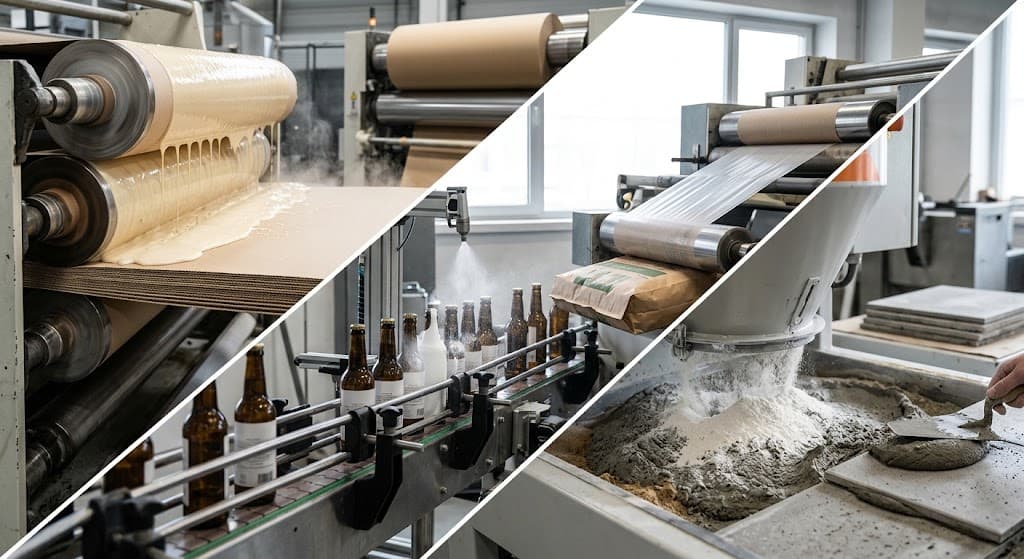
2. Aplikasi Industri
Perekat untuk Pengolahan Kayu & Kertas
Peran: Bertindak sebagai koloid pelindung selama polimerisasi emulsi Polivinil Asetat (PVAc).
Masalah Terpecahkan: Mencegah pemisahan fase emulsi PVAc, meningkatkan stabilitas beku-cair, memperpanjang waktu buka, dan meningkatkan daya rekat awal.
Kegunaan Utama: Laminasi karton berlapis ganda, penggulungan tabung kertas, lem furnitur, dan pelapis tepi.
Perekat untuk Pengemasan & Pelabelan
Peran: Bahan pengikat dan perekat utama dalam sistem pelabelan dan laminasi berkecepatan tinggi.
Masalah Terpecahkan: Meningkatkan daya rekat basah pada kaca dan plastik, mencegah penguningan/pengaburan film akibat stabilitas cahaya yang tinggi, dan memastikan pemesinan kecepatan tinggi yang bersih.
Kegunaan Utama: Pelabelan botol kaca/plastik, label perekat, kantong kertas berlapis ganda, dan laminasi film fleksibel.
Emulsi Konstruksi & Bubuk yang Dapat Didispersikan Kembali
Peran: Koloid pelindung dalam bubuk polimer yang dapat didispersikan kembali (RDP) yang dikeringkan dengan semprotan.
Masalah Terpecahkan: Mencegah penggumpalan selama penyimpanan bubuk dan memastikan kemampuan pendispersian kembali yang cepat setelah penambahan air di lokasi kerja, sehingga memberikan kekuatan tarik langsung pada matriks mortar.
Kegunaan Utama: Perekat ubin, lapisan dasar perata sendiri, sistem EIFS, dan mortar campuran kering (menggunakan bubuk halus Selvol E 205).
Sistem Perekat yang Dapat Dibasahi Kembali
Peran: Pembentuk film yang dapat diaktifkan kembali dengan air.
Masalah Terpecahkan: Membentuk lapisan kering yang tidak lengket dan cepat serta merata aktif kembali saat dibasahi ulang, menghilangkan titik dingin atau celah ikatan perekat.
Kegunaan Utama: Perekat penutup amplop, perangko, dan pita perekat kemasan yang diaktifkan air untuk logistik e-commerce.
Kertas Khusus & Pelapis Penghalang
Peran: Sebagai bahan pengikat tambahan dan agen penghalang minyak/lemak.
Masalah Terpecahkan: Viskositas larutannya yang rendah memungkinkan pengoperasian pelapis berkecepatan tinggi tanpa lonjakan viskositas; menciptakan penghalang ikatan hidrogen yang padat terhadap gemuk, minyak, dan oksigen.
Kegunaan Utama: Lapisan pelindung atas kertas termal, lapisan penghalang kertas tanpa karbon, dan karton kemasan makanan tahan minyak.
Ukuran Benang Lusi Tekstil Sintetis
Fungsi: Bahan perekat pembentuk lapisan pelindung untuk benang sintetis dan campuran.
Masalah Terpecahkan: Daya rekat yang lebih kuat pada serat poliester/nilon hidrofobik mencegah rontok dan putusnya benang selama penenunan kecepatan tinggi; kristalinitas yang lebih rendah memungkinkan penghilangan kanji dengan air panas yang bersih.
Kegunaan Utama: Pengukuran benang filamen, pengukuran benang pintal poliester-katun, dan aplikasi pengikat nonwoven basah.
Bahan Pengikat Khusus & Pelapis Industri Sementara
Peran: Pengikat sementara dan pembentuk lapisan film pengorbanan.
Masalah Terpecahkan: Memberikan kekuatan struktural sementara sebelum pembakaran bersih atau pembersihan menyeluruh dengan air tanpa meninggalkan residu.
Kegunaan Utama: Pengikat badan hijau keramik (alumina/zirkonia), lapisan pelindung yang dapat dikupas, cangkang mikroenkapsulasi, dan film deterjen dosis tunggal.
Situs web: www.elephchem.com
WhatsApp: (+)86 13851435272
Email: admin@elephchem.com



 Jaringan IPv6 didukung